
Ecuador does not have a problem with failed projects. It has a problem that is harder to name: projects that work, are well evaluated, and are recognized by multilateral organizations—but end when the initial funding runs out, with no structure in place to survive. The gap is not in technical quality. It lies in the absence of the financial ecosystem that transforms a pilot initiative into a structured, bankable asset.
Over the last decade, Ecuador implemented early childhood development programs with measurable results, rural water-access models that exceeded their targets, and community intervention initiatives recognized by multilateral organizations. Almost all of them ended when the initial funding cycle closed, with no continuity mechanism and no operational sustainability structure. Well evaluated, well documented—and unable to grow.
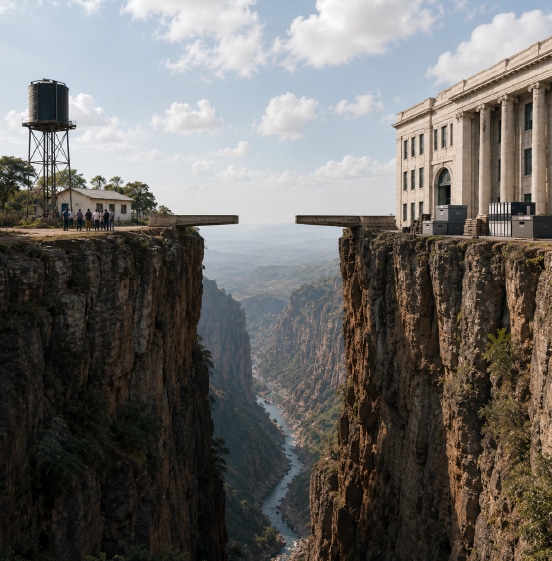
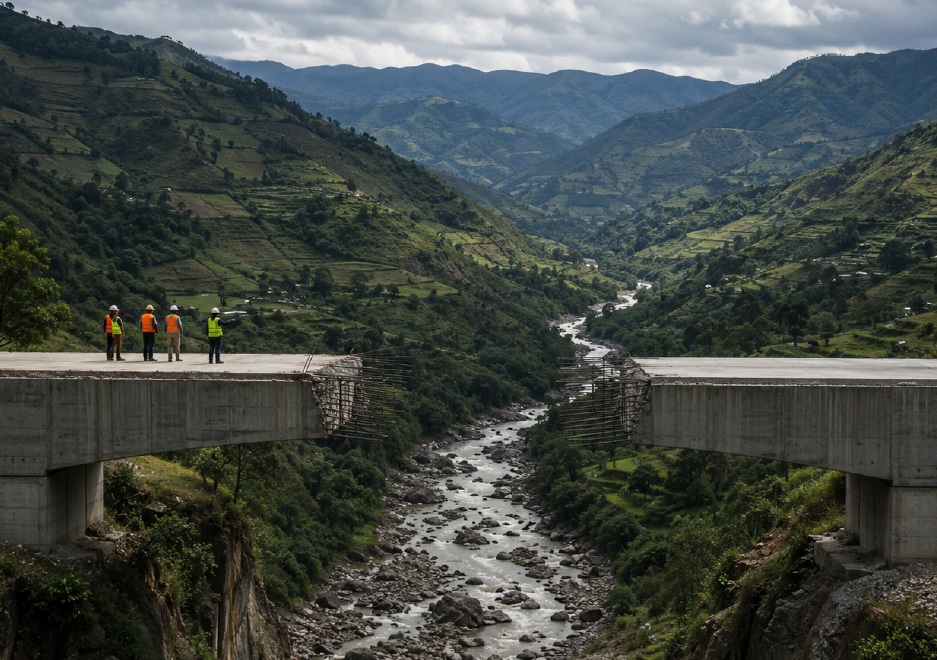
The problem is not in project design or execution quality. It lies in what comes next: the financial bridge that transforms a proven pilot into a sustainable project. That bridge does not exist in Ecuador.
“Projects that work at the local level do not scale. Not because they lack technical quality, but because there is no financial ecosystem capable of transforming them into structured assets and bankable projects.”
Eduardo Arias, CEO, Antroproyectos
The contrast with the rest of the region is both measurable and consistent. The Infrascope 2023/24 by Economist Impact, developed in partnership with the Inter-American Development Bank (IDB), documents the gap with precision: Chile leads the regional index with 78.7 points out of 100 in the enabling environment for public-private partnerships; Peru reaches 73.9, and Colombia 71.2. Ecuador scores 44.8. In the specific financing category, Ecuador records 32.5 points—15.8 points below the regional average.
Between 2014 and 2023, these three countries closed between 63 and 84 infrastructure projects with private participation each. Ecuador closed 12. The difference does not reflect a lower technical capacity to formulate projects. It reflects the absence of the instruments that make projects bankable.
What these three countries have in common is not a higher level of development. It is the deliberate construction of blended-finance instruments, specialized agencies, partial risk guarantees and multilateral-backed co-investment funds—all operating under multilateral compliance standards and structured risk-management frameworks.
Ecuador lacks each of the four instruments that allow Chile, Colombia and Peru to structure bankable projects:
The outcome is predictable: the cycle repeats itself. New pilot initiatives are financed with new cooperation resources, generate new positive evaluations—and ultimately end without continuity mechanisms, financial viability or the conditions required to sustain operations over time.
The urgent question is not how many more successful projects Ecuador is willing to archive. It is whether the country is prepared to finally build the financial bridge that transforms accumulated experience into permanent public policy and informed decision-making capable of sustaining projects over time.
That transition does not happen on its own. It requires institutional architecture decisions, financial instruments explicitly designed to attract private capital into impact sectors, and a willingness to operate under the multilateral compliance and risk-management standards that such capital demands.
“The difference is not technical capacity. It is the absence of the financial ecosystem that allows projects to become structured assets with private co-financing.”
Eduardo Arias, CEO, Antroproyectos
Antroproyectos is a strategic consulting firm that supports governments, multilateral organizations and private-sector stakeholders in structuring bankable, sustainable and verifiable projects across complex environments in Latin America.

Blended finance is the strategic combination of public resources, international development funding and private capital to structure projects that would not be financed by the market alone. Ecuador lacks both a specialized agency and guarantee instruments capable of reducing the level of risk perceived by private investors. As a result, most social-impact projects depend almost entirely on external cooperation funding and are unable to sustain operations once that funding comes to an end.
Infrascope is an index developed by Economist Impact and the Inter-American Development Bank (IDB) that assesses a country’s capacity to develop and sustain public-private partnerships (PPPs). It evaluates six categories: regulatory environment, institutional environment, operational maturity, investment climate, financing and enabling factors. In the 2023/24 edition, Ecuador scored 44.8 out of 100, compared to 78.7 for Chile.
Primarily because there is no institutional or financial mechanism capable of moving projects from the demonstration stage to the scaling stage. Without risk guarantees, co-investment funds or development banks focused on structuring impact-investment portfolios, projects remain dependent on the continuity of their initial funding source. When that funding ends, the project ends with it—regardless of its results.
All three countries deliberately built institutional architectures for blended finance: specialized agencies, multilateral-backed guarantee instruments, regulatory frameworks for PPPs and active co-investment funds. Colombia took fifteen years to consolidate this ecosystem. Chile began building it in the 1990s. Peru accelerated the process over the last decade. In Ecuador, this process has not yet begun in a systematic way.
Three concrete actions are required. First, an institutional architecture decision to create or designate an entity responsible for structuring blended-finance projects. Second, risk-mitigation instruments—particularly partial guarantees—that make private investment attractive in social-impact sectors. Third, a reorientation of public development banking toward an investment-catalyst model rather than a traditional lending model. All three conditions are achievable. What has been missing is the political decision to build them.