
The global energy system remains tied to a handful of highly fragile geographic corridors. The Strait of Hormuz is the most critical of them all: when tensions rise there, oil prices react, transportation costs increase, financial markets become unsettled and inflation re-emerges as a threat. For Ecuador, this chain reaction has a dual and structurally uncomfortable interpretation.
For years, the global energy transition promoted the idea that oil was gradually losing its role as the primary organizer of the world economy. The expansion of renewable energy, transportation electrification and climate commitments reinforced that narrative. Yet recent international developments remind us of a less comfortable reality: geography still matters.
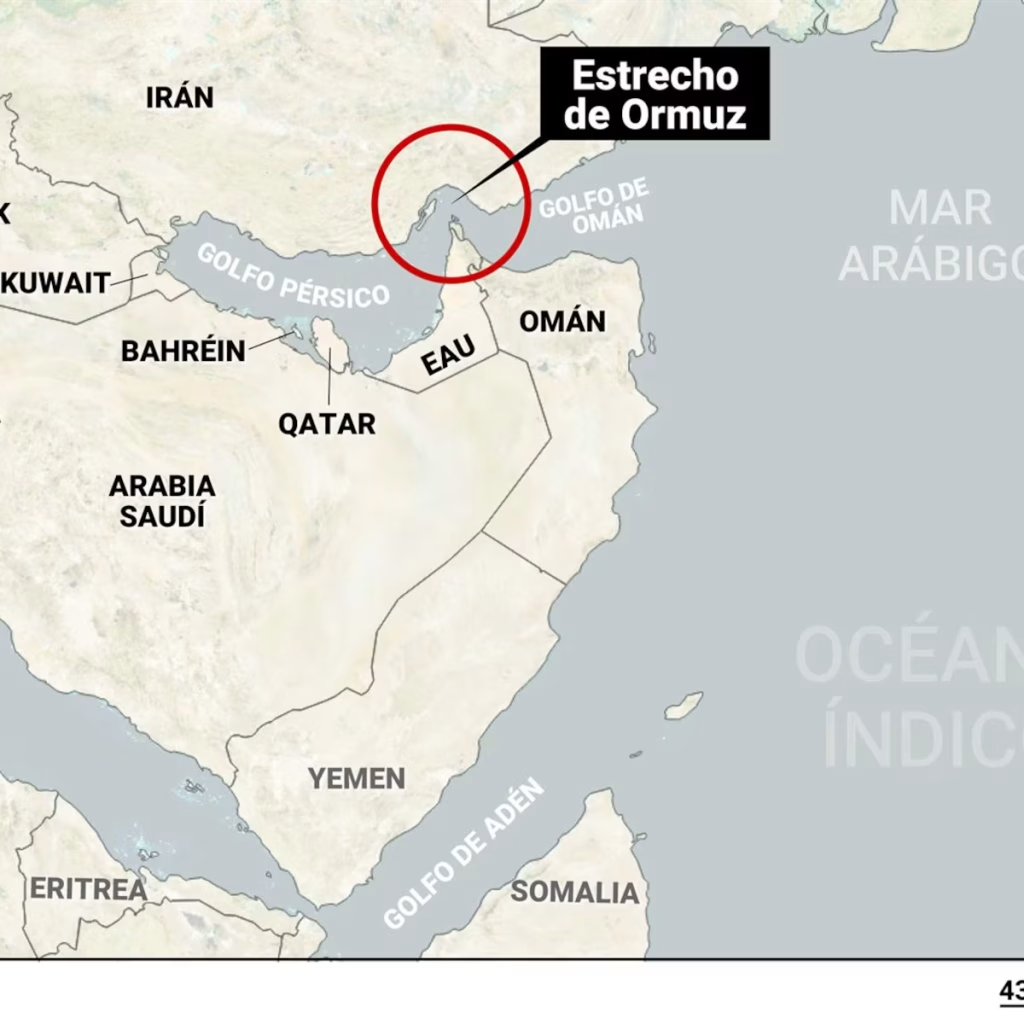
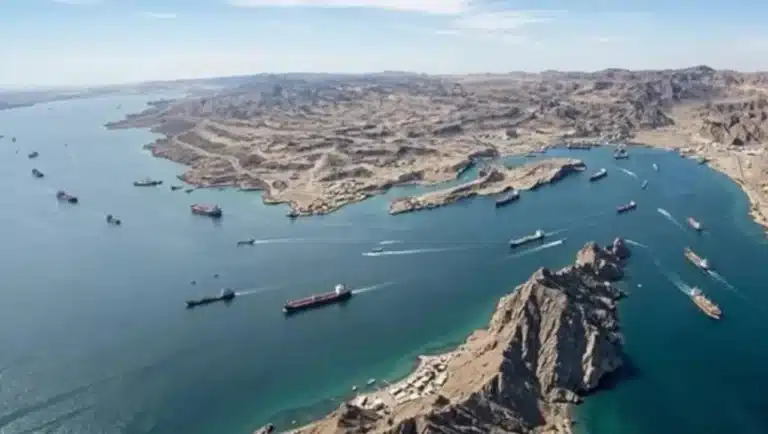
This narrow maritime corridor between Iran and Oman handles nearly 20 million barrels per day, equivalent to 20–25% of all hydrocarbons transported by sea globally, according to the EIA and UNCTAD. When this corridor comes under pressure, the issue ceases to be regional and becomes global.
Geopolitical risk does not require a complete closure of the strait to disrupt energy markets. Rising perceptions of insecurity, higher maritime insurance costs or uncertainty in navigation decisions are enough for markets to incorporate a new risk premium.
What risk models once described as a tail-risk scenario has now become operational reality. During the first days of heightened tensions, more than 700 oil and LNG vessels, according to Kpler, were delayed or waiting outside the strait. Brent crude surpassed USD 100 per barrel on March 8, 2026—the first time in four years—and climbed to USD 126 at its peak.
The international response was immediate. The International Energy Agency (IEA) coordinated the release of 400 million barrels of strategic emergency reserves among its 32 member countries. Major global shipping companies—including Maersk, CMA CGM and Hapag-Lloyd—suspended transit through the area.
The worst-case scenario is no longer a projection; it is the baseline from which future developments must be assessed. The difference between scenarios depends not only on military intensity but also on the duration of the conflict and the ability of global logistics systems to adapt.
The issue extends far beyond energy. It also affects inflation. Recent estimates suggest that a 10% increase in oil prices can add 0.1 to 0.2 percentage points to inflation in economies such as the United States and Europe in the short term.
This may seem modest, but in a context where central banks are still trying to consolidate price stability, a prolonged energy shock can alter monetary policy, delay interest-rate cuts and tighten global financial conditions.
For Latin America, this type of crisis has three different implications:
Ecuador occupies a paradoxical position in this scenario. The country remains a crude oil exporter while continuing to rely on imported derivatives such as diesel, gasoline and liquefied petroleum gas to supply its domestic market.
As a result, every increase in international oil prices has two sides:
For this reason, global oil price volatility does not necessarily strengthen the Ecuadorian economy. Instead, it exposes a structural weakness: a country that exports oil but has not fully solved its dependence on imported refined fuels nor developed sufficient protection against recurring external shocks.
Hormuz brings this reality back into focus. Not only because it confirms that oil remains at the center of the global economic system, but because it reminds us that geography still shapes the international economy.

The central question is not merely what will happen with Iran or how long this escalation will last. The strategic question for Ecuador is more direct: Is the country truly prepared to operate in a world where global energy shocks will continue to redefine the conditions of economic stability?
Preparation is not only a technical matter—it is a question of institutional architecture, budgetary discipline and the ability to transform risk exposure into investment decisions before the next crisis arrives.
Antroproyectos is a strategic and technical consulting firm that helps public institutions and private-sector organizations transform complex risks—energy, territorial and geopolitical—into concrete decisions, projects and operational capabilities on the ground.
The Strait of Hormuz is a 54-kilometer-wide maritime corridor between Iran and Oman through which 20–25% of the world's seaborne oil trade passes. It is the most critical energy chokepoint on the planet: even a partial disruption in this corridor is enough to move global crude oil prices within hours.
The military escalation involving Iran increased the perception of risk along shipping routes through the Strait of Hormuz. More than 700 vessels were delayed or waiting outside the corridor, maritime insurance costs surged, and major global shipping companies suspended transit through the area. This combination pushed Brent crude from around USD 80 per barrel to a peak of USD 126 per barrel, reflecting the market’s concern over potential disruptions to one of the world’s most critical energy supply routes.
A 10% increase in crude oil prices can raise inflation by approximately 0.1 to 0.2 percentage points in advanced economies in the short term. In emerging economies, where dependence on imported fuels is higher and fuel subsidies remain significant, the impact can be more pronounced, increasing transportation, production and energy costs throughout the economy.
Both, at the same time. Ecuador benefits because it exports crude oil and therefore receives higher revenues when international prices increase. However, it is also negatively affected because it relies on imports of refined fuels—including diesel, gasoline and liquefied petroleum gas (LPG)—to supply its domestic market, and the cost of those imports rises as well. In a context where fuel subsidies remain in place, the additional pressure on public finances can offset—or even exceed—the gains generated by higher crude oil export revenues.
Ecuador can reduce its vulnerability by decreasing its dependence on imported refined fuels through investment in domestic refining capacity, diversification of the energy matrix and the creation of stabilization mechanisms that help cushion the fiscal impact of energy price volatility. The solution is not purely technical: it also requires institutional continuity, long-term planning and the discipline to implement strategic investments beyond electoral cycles.